

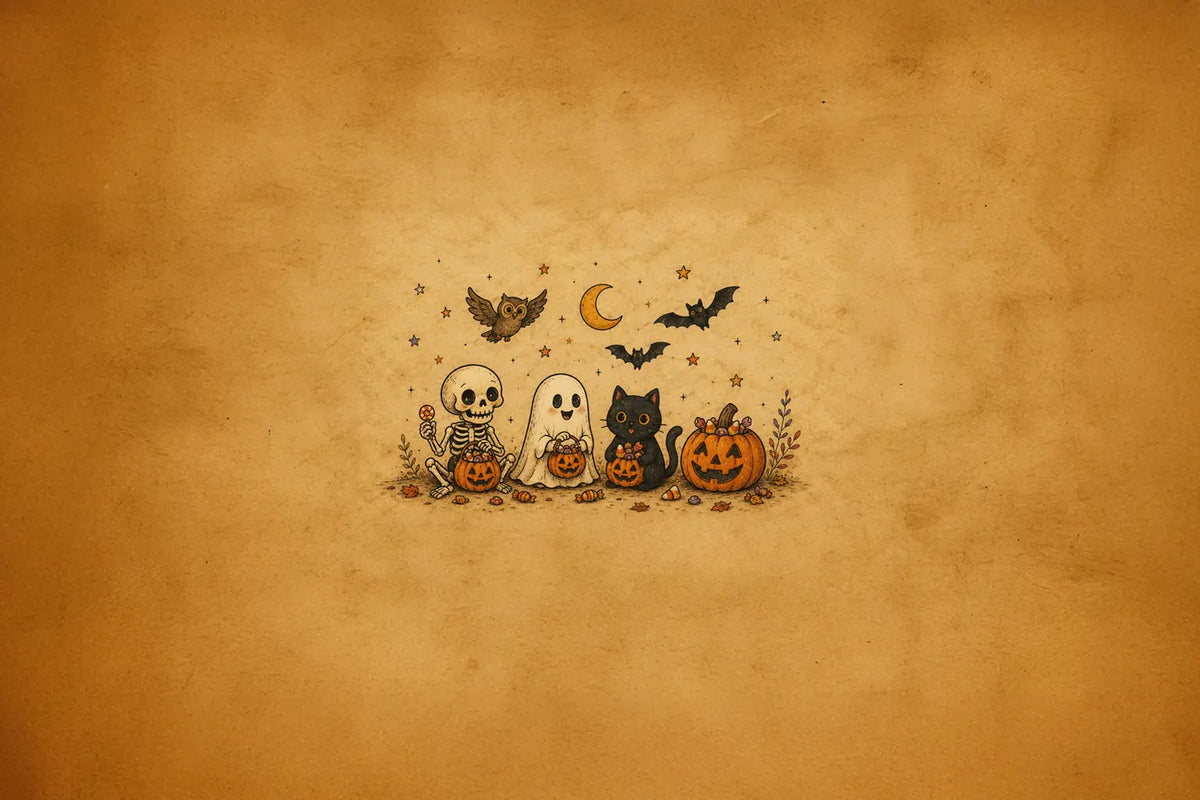
When Darkness Learns to Smile
For generations, gothic art has been known for its darker side. Moonlit forests, black cats, ravens, skeletons, ancient tarot cards, mysterious creatures, haunted houses, and eerie landscapes have always been part of its identity. It's a style built around mystery, folklore, and the beauty of the unknown.
But gothic doesn't always have to be serious.

Sometimes, all it takes is one unexpected twist to completely change the mood. A black cat secretly stealing Halloween candy. A raccoon brewing potions with complete confidence. A ghost enjoying a peaceful boat ride. Suddenly, the dark atmosphere becomes playful instead of frightening.


That's exactly what makes cute gothic wildlife so much fun. These designs keep everything people love about gothic aesthetics—the forests, the moonlight, the folklore, the mysterious animals—but add enough humor to make you smile instead of hiding behind the couch.
Black Cats, Tarot Cards & Tiny Mystics
Few animals belong in the gothic world quite like black cats. They've appeared in folklore, mythology, and witch legends for centuries, becoming symbols of mystery, intuition, and magic.

But they also happen to have an incredible talent for looking suspiciously guilty.

Whether they're guarding a tarot card, stealing candy instead of predicting the future, or quietly judging everyone from under the moon, black cats manage to be elegant and hilarious at exactly the same time. Their mysterious reputation makes even the smallest joke feel wonderfully dramatic.

Skeletons That Refuse to Be Scary
Skeletons usually belong in horror movies, haunted houses, or ancient legends.
Ours have very different priorities.

Instead of chasing people through dark forests, they're busy scrolling their phones, collecting candy, surviving Halloween chaos, or finding themselves in absurd situations no serious skeleton would ever admit to. Even a prehistoric T-Rex skeleton somehow becomes more funny than frightening.

Adding personality to something that's traditionally spooky is what makes these designs memorable. They keep the gothic look while replacing fear with clever humor.

Trash Pandas, Possums & Forest Troublemakers
If any animals were born for funny gothic art, it's raccoons, possums, and skunks.
They already look like tiny woodland outlaws. Give them witch hats, bubbling cauldrons, moonlit forests, haunted campsites, or magical potions, and somehow everything makes perfect sense.


From potion experiments that go terribly right, to midnight deliveries on bats, candy theft, dumpster rituals, or simply embracing their wonderfully chaotic personalities, these mischievous little creatures capture the lighter side of gothic storytelling better than almost anyone else.

Night Creatures That Already Belong in Gothic Stories
Some animals hardly need any help fitting into gothic artwork.
Owls watching silently from old trees, bats flying beneath the moon, foxes wandering quiet forests, ravens perched on forgotten branches—they've always been part of mysterious stories.


The difference here is that instead of making them intimidating, they're given playful personalities that celebrate how fascinating these animals really are. They still belong to the night, but now they're also full of charm.


Ghosts, Pumpkins & Cozy Spooky Adventures
Not every ghost wants to haunt abandoned mansions.
Some would rather bake cookies, paddle across a quiet lake with a few black cats, visit the pumpkin patch, go hiking through colorful forests, or simply enjoy a peaceful autumn evening.


Combined with smiling jack-o'-lanterns, friendly spirits, woodland animals, and cozy fall colors, these designs capture the softer side of spooky season—one that's filled with laughter, crisp air, falling leaves, and just enough mystery to keep things interesting.


Why Funny Gothic Wildlife Works
There's something surprisingly satisfying about mixing beautiful gothic artwork with unexpected humor.
A tarot card becomes a candy collector.

A possum becomes strangely adorable.

A skeleton develops an attitude.

A ghost finds a new hobby.

A raccoon somehow becomes the neighborhood's most questionable wizard.


Those little surprises make each design feel more personal. They don't make gothic art less magical—they simply remind us that mystery and humor can exist together.
Conclusion
Gothic nature has never been only about darkness. It's also about imagination, storytelling, strange creatures, old legends, and the beauty hidden inside mysterious places.

Adding humor simply gives those stories another layer.

Whether it's a tarot-reading black cat, a potion-making raccoon, a dramatic skeleton, a mischievous possum, or a friendly ghost enjoying autumn with woodland friends, these designs celebrate a version of gothic that's charming, playful, and full of personality.

And when Halloween finally rolls around, they feel perfectly at home—bringing just the right mix of spooky charm, cozy autumn vibes, and a smile that's much bigger than the scare.


